[Avg. reading time: 5 minutes]
IoT Data Characteristics
What is IoT Data?
IoT data is generated continuously from sensors and devices interacting with the physical world.
Unlike traditional datasets:
- It is time-dependent
- It arrives as a continuous stream
- It reflects real-world conditions, not controlled inputs
Examples
- Temperature readings every second
- Machine vibration signals
- GPS location streams
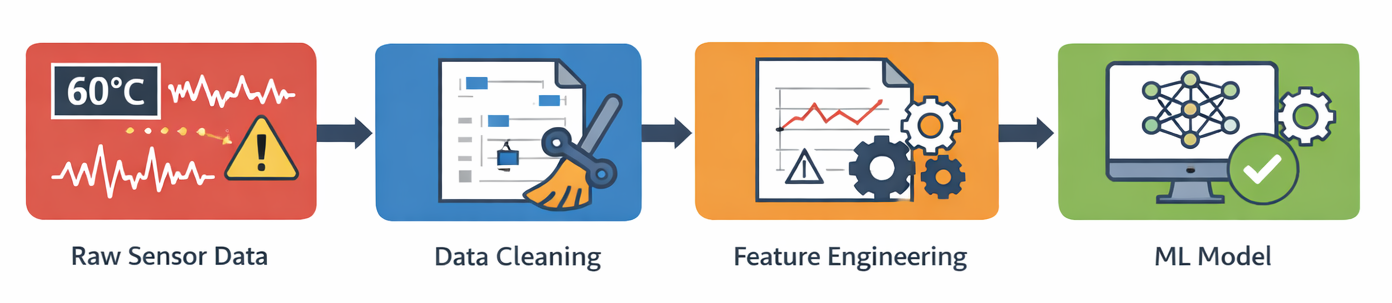
Key Characteristics of IoT Data
1. Time-Series Nature
- Data is ordered by time
- Past values influence future values
Example
- Temperature at 10:01 depends on 10:00
2. High Frequency & Volume
- Data generated every second (or faster)
- Quickly becomes large-scale
3. Noisy Data
- Sensors are imperfect
- External conditions introduce fluctuations
Example
- Temperature spikes due to environment, not actual issue
4. Missing Data
- Network issues
- Device downtime
- Transmission failures
5. Outliers & Spikes
- Sudden jumps or drops
- Could be real events OR sensor errors
6. Correlated Signals
- Multiple sensors interact
Example
- Temperature ↑ → Pressure ↑ → Humidity ↓
7. Continuous & Streaming
- Data is not static
- Always flowing
Data Quality Challenges in IoT
1. Missing Values
- Gaps in data streams
- Need interpolation or handling strategies
2. Duplicate Data
- Common with MQTT QoS1 (at-least-once delivery)
3. Out-of-Order Data
- Events may arrive late
- Timestamp handling becomes critical
4. Sensor Drift
- Sensors degrade over time
- Gradual deviation from true values
5. Noise vs Signal Problem
- Hard to distinguish real events from random fluctuations
Why This Matters for ML
Raw IoT data:
- Is not directly usable
- Leads to poor model performance
- Causes false alerts and missed predictions
Before applying ML, we must transform raw data into meaningful signals using Feature Engineering.