[Avg. reading time: 6 minutes]
Introduction
What is IoT
The Internet of Things is a system where physical objects are equipped with sensors, software, and network connectivity so they can collect data, communicate over the network, and trigger actions without continuous human involvement.
IoT is not just the device.
IoT is devices + data + connectivity + action.
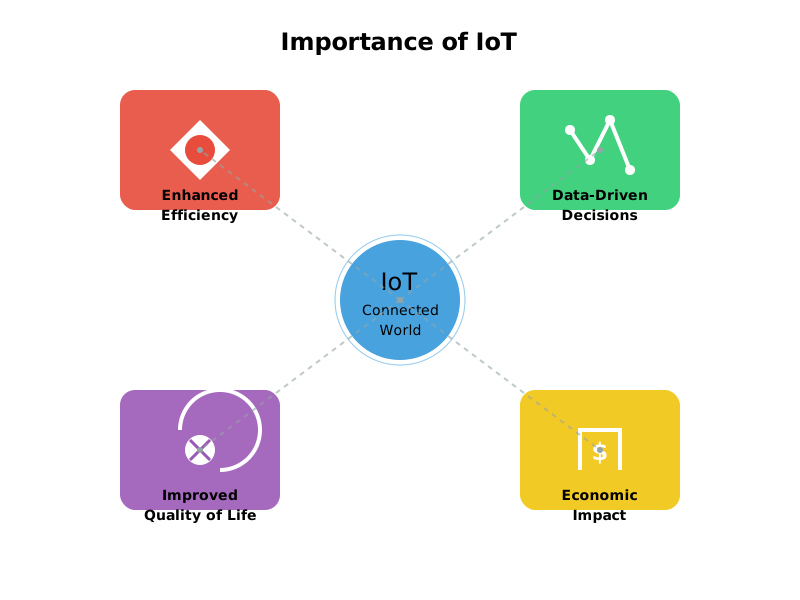
Why IoT Matters
Operational Efficiency
- Automates repetitive and time sensitive tasks
- Reduces manual monitoring and human error
- Enables real time visibility into systems
Data Driven Decisions
- Sensors generate continuous time series data
- Decisions shift from intuition to measurable signals
- Analytics and ML sit on top of IoT, not the other way around
Quality of Life
- Healthcare monitoring, smart homes, traffic systems
- Problems are detected earlier, not after failure
- Convenience is a side effect, reliability is the real win
Economic Impact
- New products, new services, new pricing models
- Hardware vendors become data companies
- Entire industries move from reactive to predictive
What is not IOT
Devices that work only locally
- A USB temperature sensor dumping values to a laptop
- An electronic thermostat controlling temperature locally
- No network, no IoT
Systems with no outward data flow
- Hardware that performs an action but emits no telemetry
- If data never leaves the device, it is automation, not IoT
What MUST exist for something to be IoT
- Continuous or event based data generation
- Network communication
- Backend ingestion
- Storage, usually time series oriented
- Processing or decision making
- Optional but important feedback or control loop
Examples
Watch vs Smart Watch
CO Detector vs Smart CO Detector
- Senses CO locally
- Triggers a buzzer or alarm
- Operates entirely offline
vs
- Transmits CO readings or alarm events
- Uses a network to communicate
- Notifies an external system such as a phone app, home hub, or fire department
Read more
Local intelligence is embedded systems. Networked intelligence is IoT.