[Avg. reading time: 10 minutes]
IoT Specific Cloud
BaaS – Backend as a Service
BaaS provides backend features like authentication, real-time databases, and cloud functions, useful for mobile or lightweight IoT apps.
Example: Firebase. To some extent OAuth services like Google.
Pros
- Easy to integrate with mobile/web apps
- Realtime sync and authentication
- Fast prototyping
Cons
- Not designed for heavy industrial use
- Vendor limitations on structure/storage
- Less control over backend logic
DaaS – Device as a Service
DaaS bundles hardware devices with software, support, and cloud services, often with subscription billing.
A logistics company rents connected GPS from a provider, who also offers a dashboard and device monitoring as part of the plan.
Renting (house, car etc..)
Pros
- No hardware management
- Subscription model (OpEx > CapEx)
- Full-stack support
Cons
- Ongoing cost
- Tied to specific hardware/software ecosystem
- Less flexibility
Edge-aaS – Edge-as-a-Service
Edge-aaS enables local processing at the edge, closer to IoT devices. It reduces latency and bandwidth usage by handling logic locally.
Example: AWS Greengrass
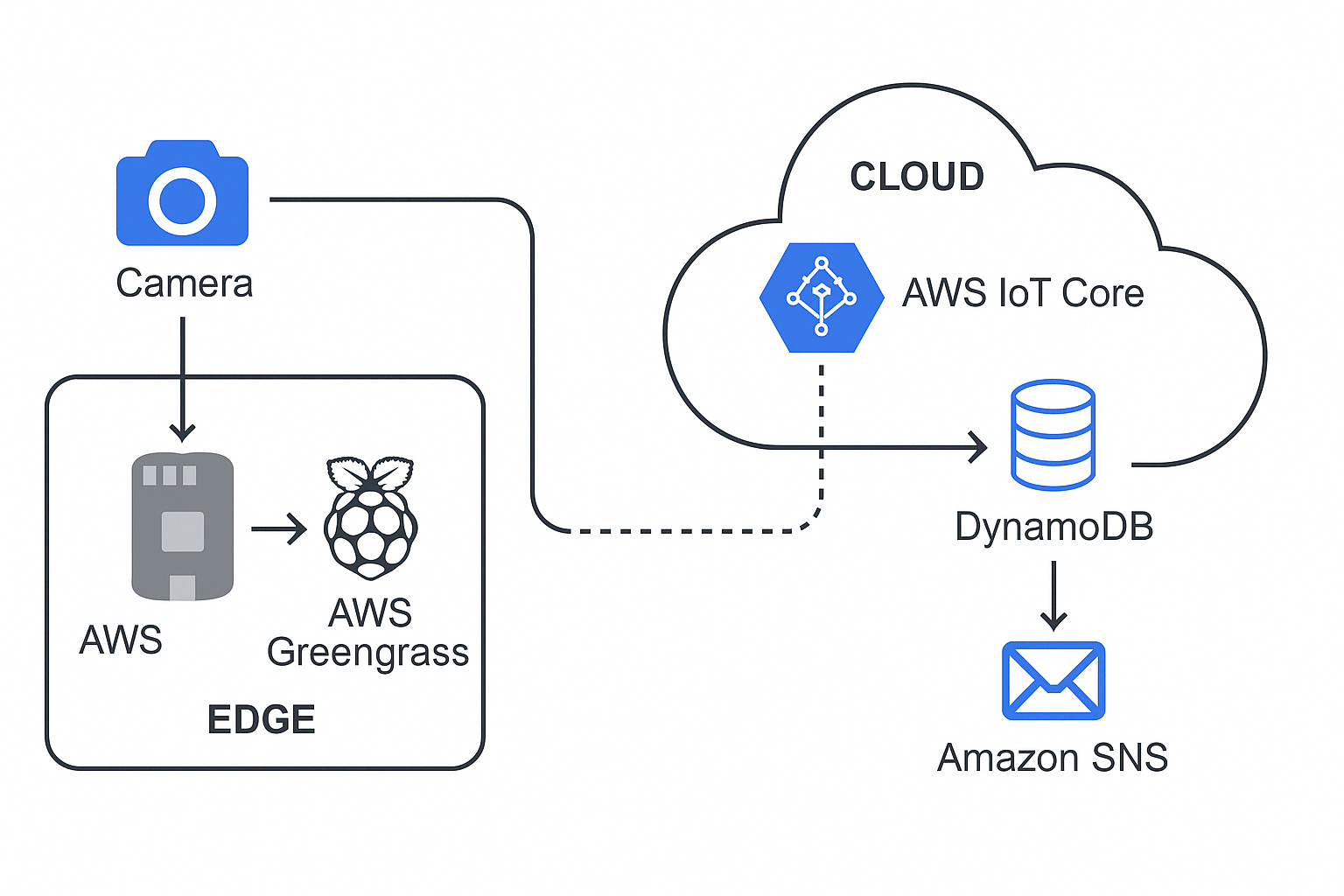
Run Everything Locally
- Camera sends input to Pi
- Greengrass Lambda processes it in real time
- Result (e.g., “object: person”) can be:
- Logged locally
- Sent to AWS via MQTT
- Triggered to send message
Pros
- Low latency, offline capable
- Reduces cloud traffic and cost
- Supports on-device inference
Cons
- More complex deployment
- Device resource limitations
- Must sync carefully with cloud
DTaaS – Digital Twin as a Service
DTaaS offers cloud-hosted platforms to create, manage, and simulate digital replicas of physical systems (machines, buildings, etc.).
Example: Siemens MindSphere
A manufacturing firm models its conveyor system using MindSphere to monitor, predict failures, and optimize throughput using simulated conditions.
For understanding - Flight / Video Game Simulator
Pros
- Powerful simulation and monitoring
- Real-time mirroring of assets
- Integrates well with AI/ML
Cons
- Complex to model accurately
- Requires continuous data flow
- Can be costly at scale
Cloud Service Models for IoT
| Service Model | Full Form | IoT-Specific Role/Usage | Examples |
|---|---|---|---|
| SaaS | Software as a Service | Ready-to-use IoT dashboards, analytics, asset tracking | Ubidots, ThingSpeak, AWS SiteWise, Azure IoT Central |
| PaaS | Platform as a Service | Build, deploy, manage IoT apps with SDKs and device APIs | Azure IoT Hub, AWS IoT Core, Google Cloud IoT (legacy), Kaa IoT |
| IaaS | Infrastructure as a Service | Run VMs, store raw sensor data, scale infra | AWS EC2, Azure VMs, GCP Compute Engine |
| FaaS | Function as a Service | Event-driven micro-processing (e.g., react to MQTT events) | AWS Lambda, Azure Functions, Google Cloud Functions |
| DaaS | Device as a Service | Subscription-based hardware + cloud updates | Cisco DaaS, HP DaaS |
| BaaS | Backend as a Service | Auth, DB, messaging backend for IoT apps | Firebase, Parse Platform |
| Edge-aaS | Edge-as-a-Service | Run ML + logic at the edge, sync with cloud | AWS Greengrass, Azure IoT Edge, ClearBlade |
| DTaaS | Digital Twin as a Service | Simulate, monitor, and control physical devices virtually | Siemens MindSphere, PTC ThingWorx |